A brief history of Moondarra Wagyu
I have always believed beef could be sold into restaurants branded by variety and region, in the same manner as wine.
In the early 90s, my parents’ Angus and Black Baldy steers topped the market every time they were sold; yet the meat didn't taste discernibly different to the offering at the local butcher. It was great but not distinctively different enough. In about 1994 I became aware of Wagyu genetics leaving Japan and we launched headlong into breeding Wagyu with the aim of selling beef into restaurants, differentiated from other beef by both the flavour of their provenance and their breeding.
Our initial experiments with Wagyu were sold through Birdcage, our sushi bar located in the foyer of The George Hotel, at the Paris end of Fitzroy Street, in StKilda. I learnt a great deal from chefs Kazu Nomura, who had studied for apprenticeship in Kobe, and Mitsuo Shitanda. These days we name our Mishima X bulls in honour of my dear friend Mitsuo.
From these initial experiences I discovered that ‘Wagyu’ was a poor descriptor, covering all cattle from Japan, including Shimane, Hide, Kedaka and Tajima. Tajima are the type bred in Hyogo Prefecture. Kobe is the most highly marbled and prized beef in the world. Whilst Tajima are generally smaller, later maturing and the mothers produce less milk, the meat is dramatically better than that produced in other regions. We very quickly shifted our focus to Fullblood Tajima cattle.
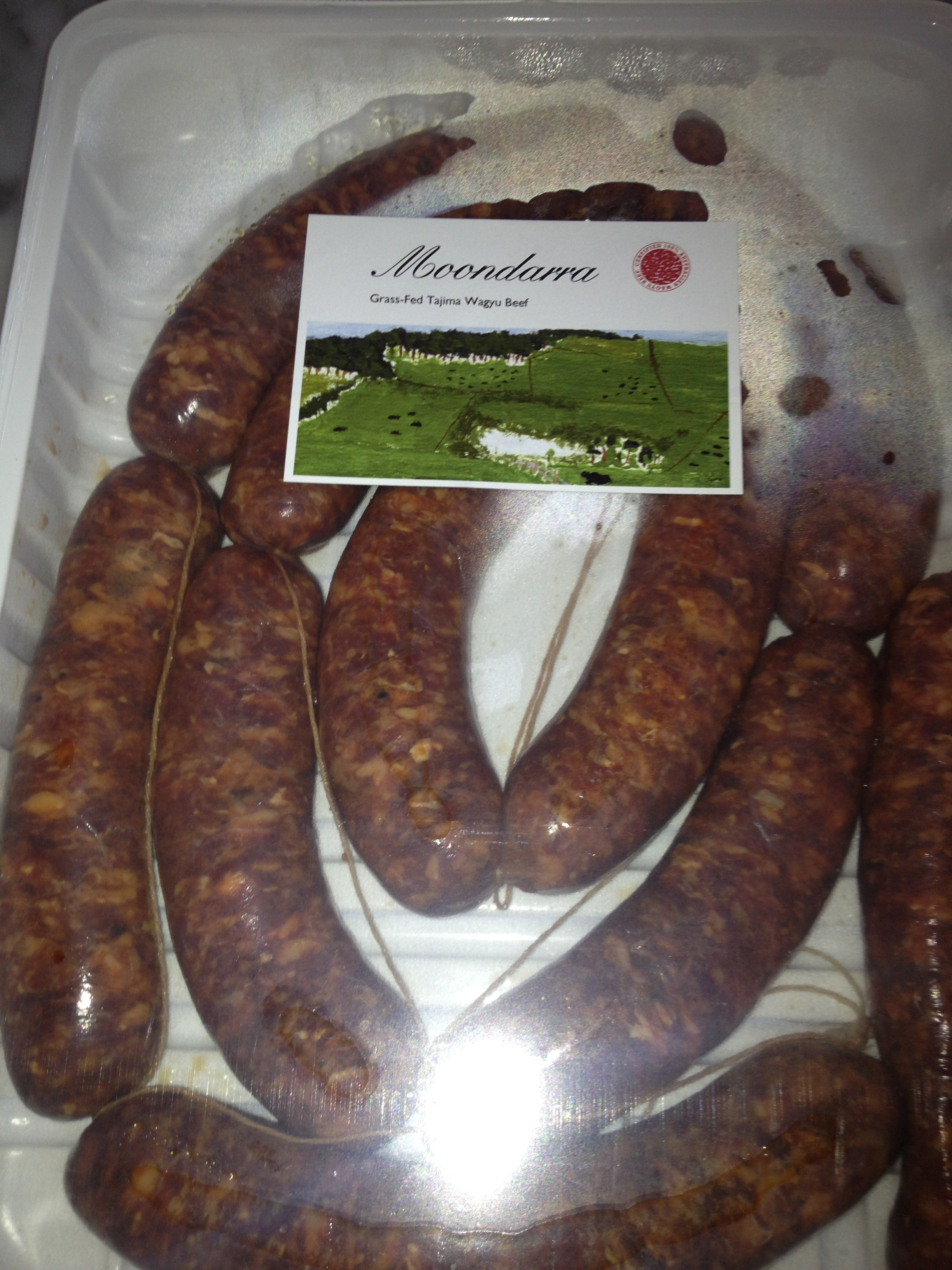
The first Moondarra Wagyu beef we produced was grain-fed for 600+ days, in the traditional Japanese manner, and we produced some amazing meat. However, I’d strayed from my precept of selling meat branded by variety and region. Moondarra Wagyu lacked any ‘goût de terroir’, the flavour of provenance, so we shifted to grass-feeding our steers.
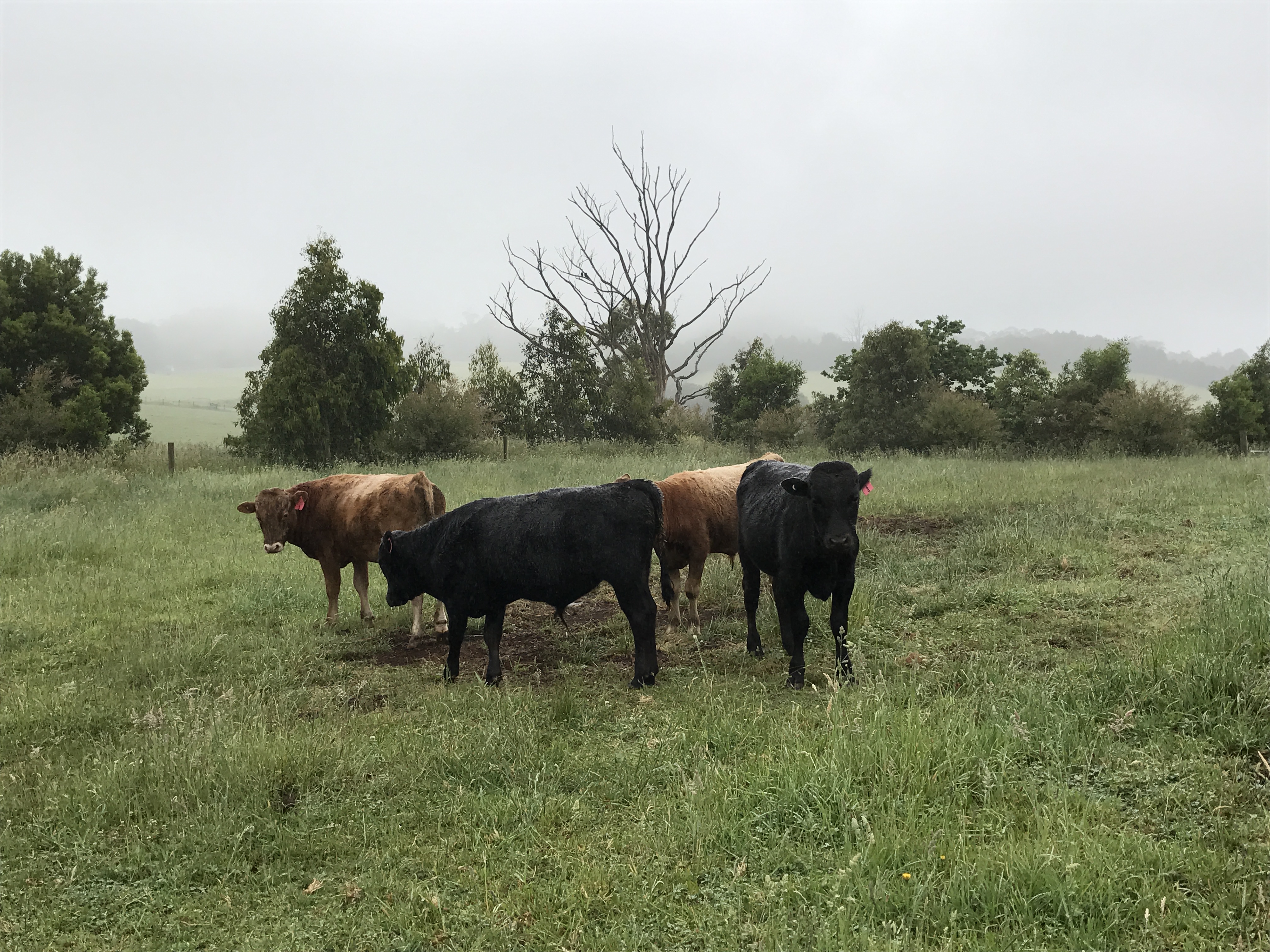
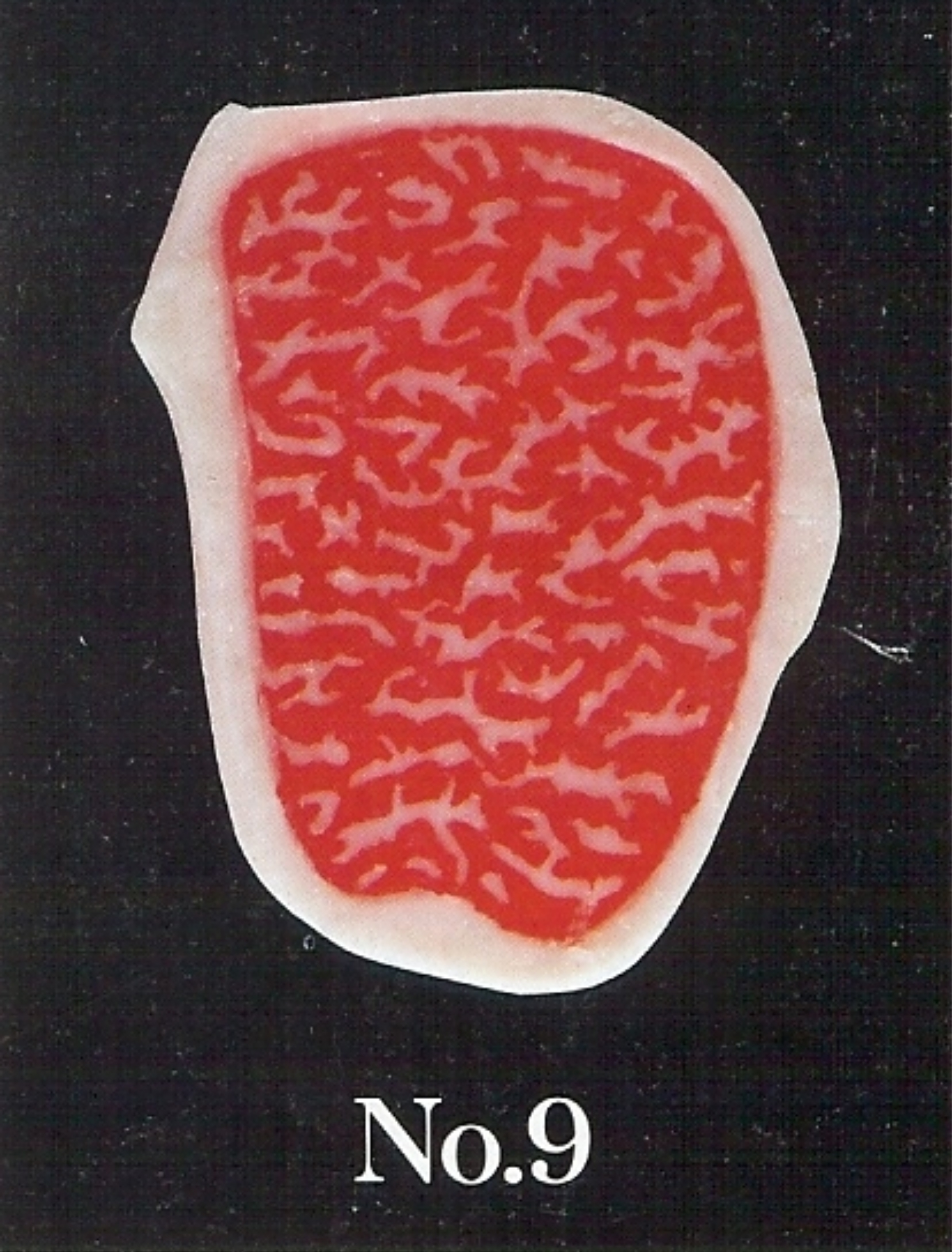
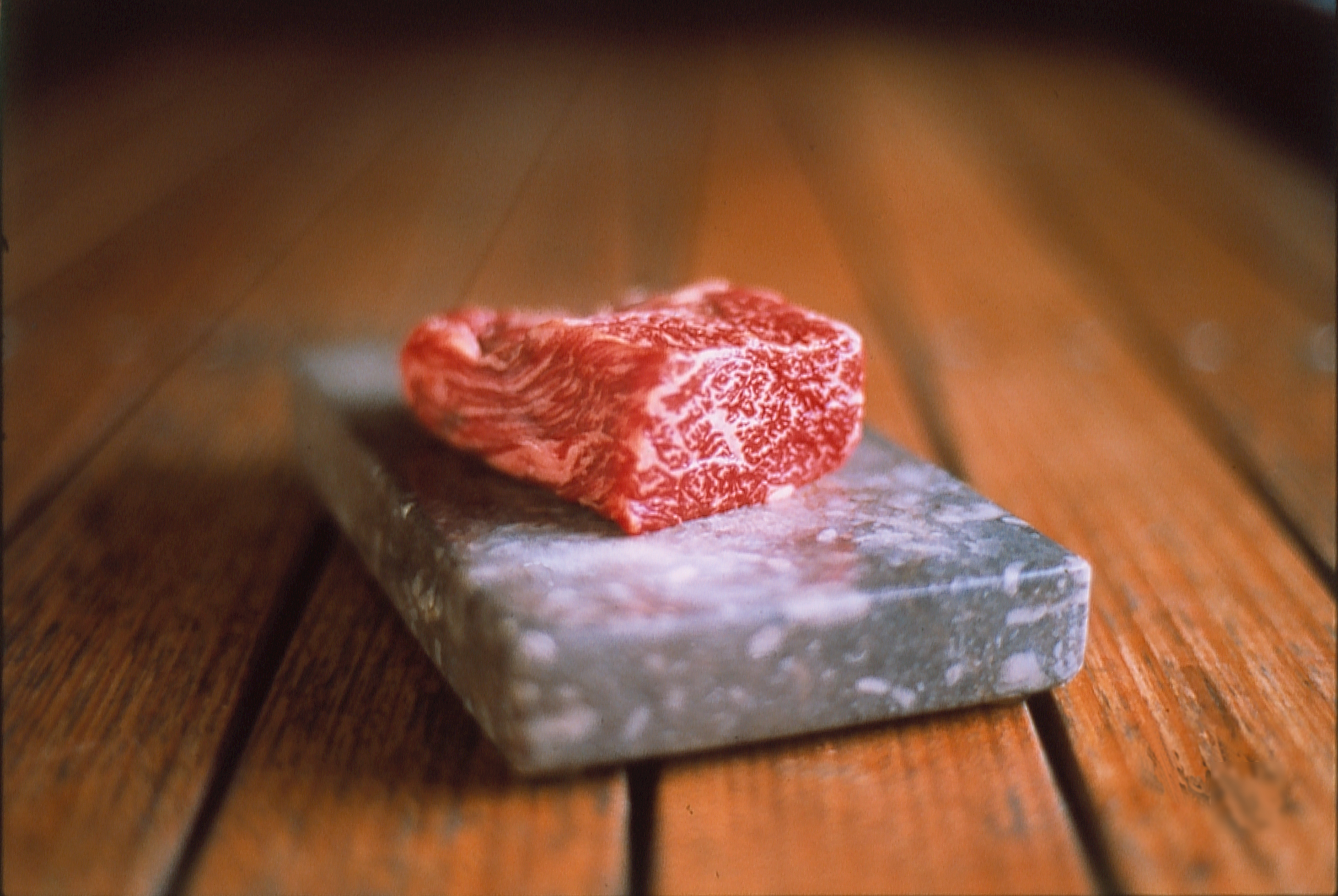
The resulting meat was a huge improvement. The marbling was less intense, but the meat had the fabulous mineral flavour of grass-fed beef alongside the sweet ‘melt in your mouth’ fat of Wagyu. It was somewhere between Kobe or Miyazaki beef and great Scottish or Argentinean grass-fed beef. This feeding regime reinforced that our Wagyu needed to be mostly Tajima to produce marbling in these compromised circumstances. We have refined our on farm management and our genetics even further so Moondarra beef is now consistently marble score 7 to 9.
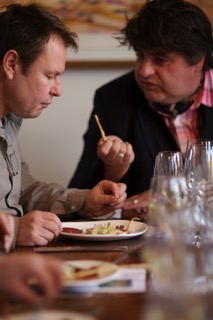
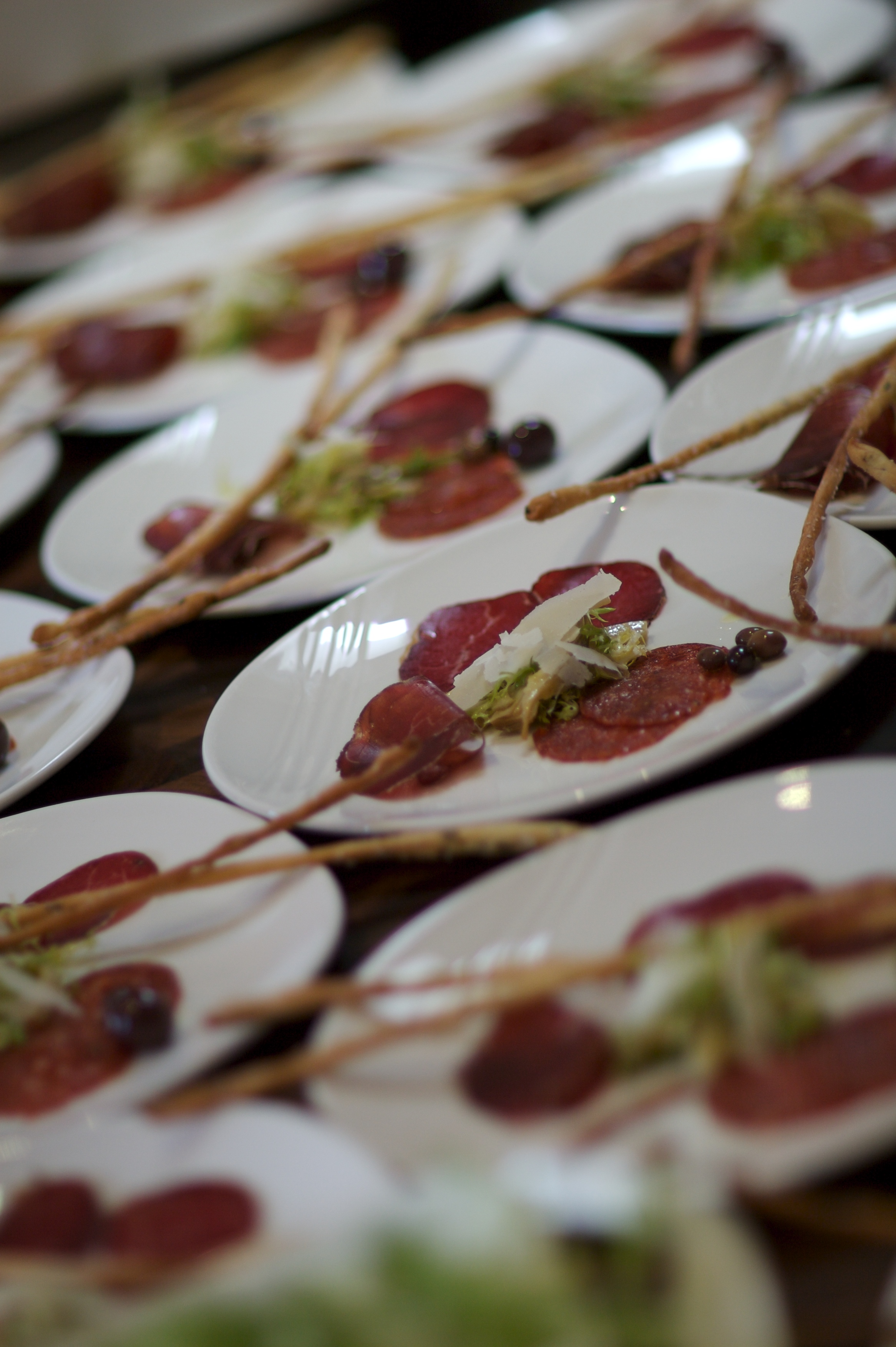
John Lethlean and Matt Preston eating Moondarra Wagyu Carpaccio prepared by Briggete Haffner.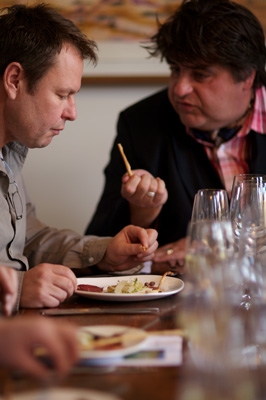
Two lines of Tajima
Our initial Wagyu purchased in 1994 were American purebred. In 1996 we purchased some Shimane type Wagyu. Subsequently we’ve bred two lines of Tajima cattle, focused on females.
Suzitani/Kumanami.
Pedigree Suzitani
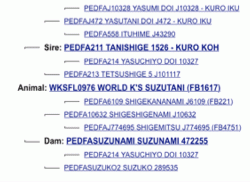
Pedigree Shigeshigenami
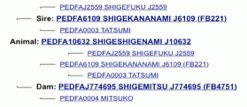
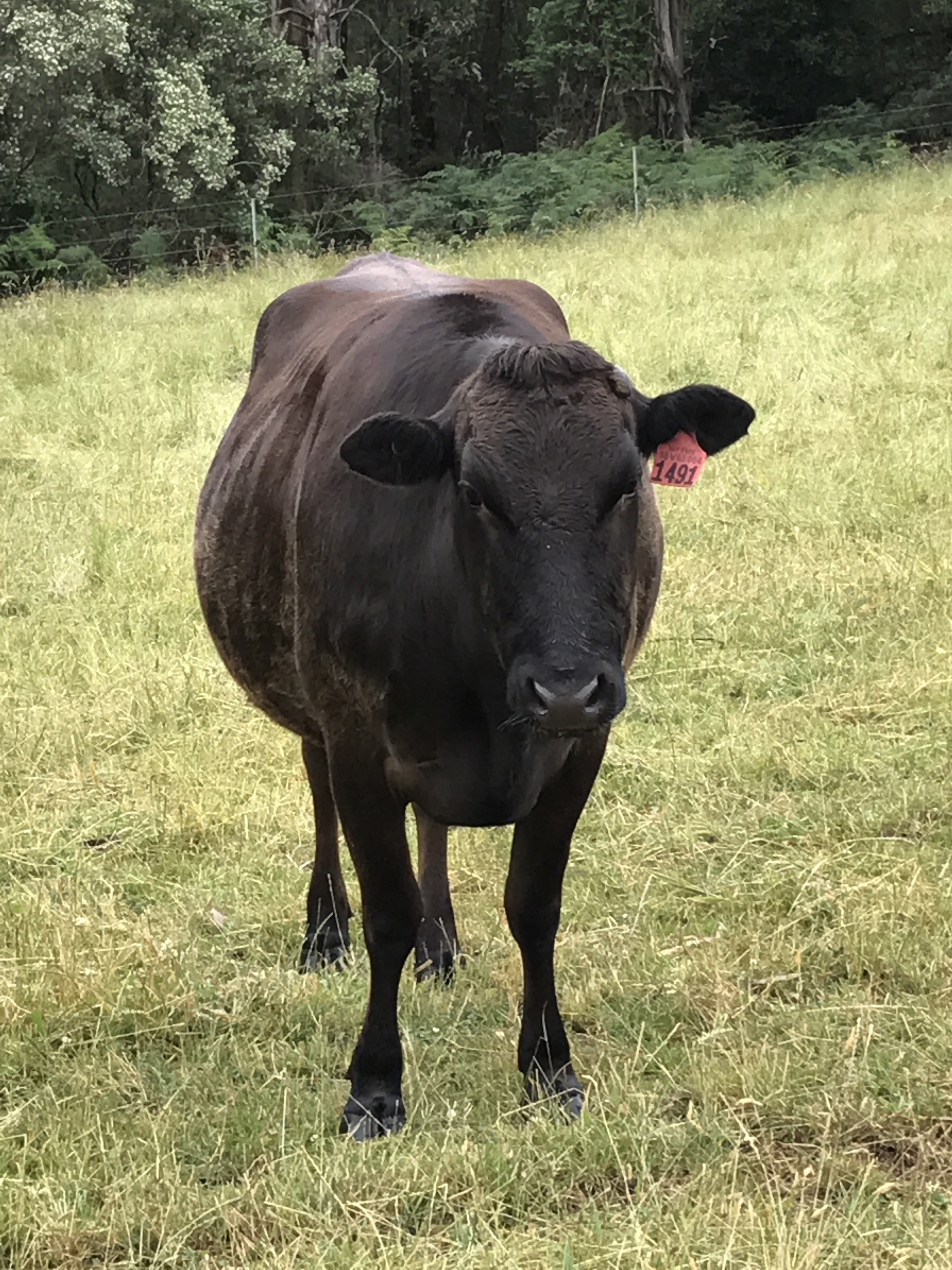
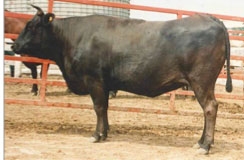
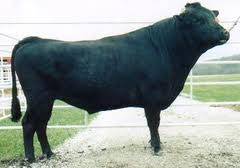
We have bred lines from a couple of different Suzitani daughters, using her sons, including Shikikan, Sanjirou, ShigeShigeTani, Kanadagene100/5 and Kaneyama, and her linebred Grandson, Yujirou. We also use TF 148 Itoshigenami, linebred to ShigeShigeNami, Suzitani’s maternal grandsire to ‘cross out’ but retain the line. ShigeShigeNami is the result of traditional close breeding. His sire, Shigekanenami is also his maternal grandsire. Our Suzitani/ShigeShigeNami cattle are black in colour, rather than chocolate with ‘straighter’ back lines and confirmation more like European breeds. They are free from recessive genetic defects.
Pedigrees of two of our important Suzitani Cows
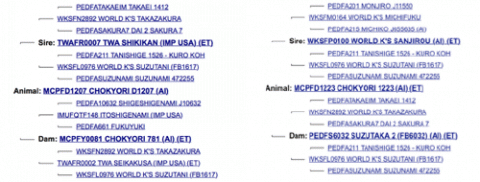
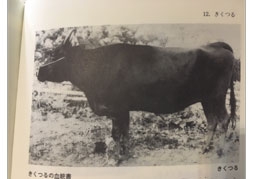
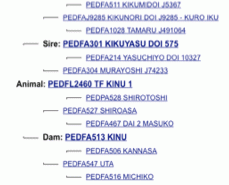
Kinu1/Kikutsuru
Kinu 1 is an Oki doi cow exported to the USA in 1995. We linebreed her to bulls influenced by the ‘Hyogo Cow’, Kikutsuru; TF 146, JVP 068, Westholme 007 and Kimifuku 3. We’ve also started using some Kimifuku 3 sons out of Kinu 1. The Oki doi line was started by breeding a cow from Takeno, in Hyogo prefecture, with Tajira, the original Tajima bull. TakenoUshi were an original, smaller type cow, similar to the cattle selected from Yamato/Nara Island which were sent to repopulate Mishima Island after the Gyueki (possibly Rindepest) killed all of the cattle there. These cattle are now known as Mishima Ushi and are a national treasure.
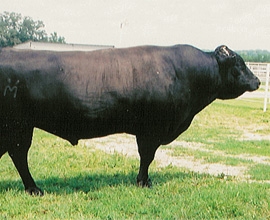
The ‘Hyogo Cow’, Kikutsuru, is considered the most important cow in the Tajiri line. Using bulls from this line over Kinu 1 line females produces steers with extreme marbling and bulls with amazing genetic potency to pass on these genetics. These cattle are the classic Tajima chocolate colour and have the classic Tajima shape with strong forequarters and fine rump
Pedigree Kikutsuru, ‘The Hyogo Cow’
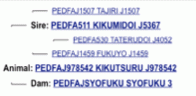
We sell bulls from both lines domestically and export embryos in partnership with Wagyu Sekai. Please email me at Neil@Moondarra.com.au for details.
Pedigree Kinu 1
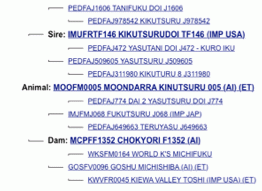
Our cow Kinutsuru OO5
Polled Wagyu, Mishima and Gippsland Poll.
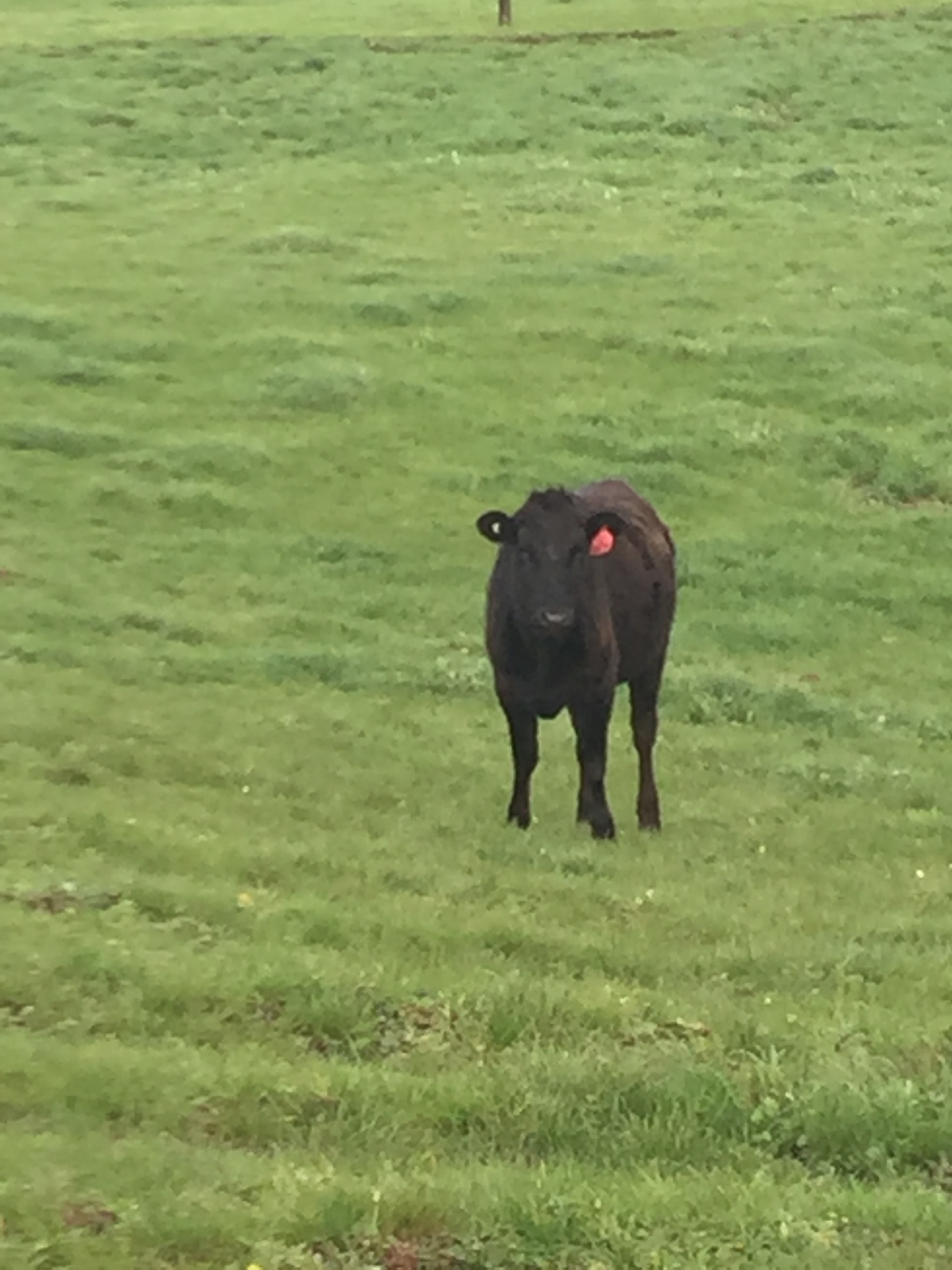
We have some Purebred polled Wagyu bred up from our Suzitani/Kumanami line cattle. We will continue to develop these cattle with an eye to breedplan figures. These cattle are free of recessive genetic diseases and have high marbling figures. The bulls are; Kumanami Mukaku. The cows are Suzitani Mukaku.
We have some Mishima cattle, all bred up from TF152, known as Kamui Kamui or alternatively as Wakausa. Our Mishima bulls are named after my friend Mitsuo and the cows after Sayuki, also known as Fiona Graham, a Melbourne woman who has trained as a Geisha; sayuki.net
Hatsushio
Yamato
Sire Takara
Fubuki
Sawakaze
TF152 Kamui Kamui
Yamato
Shiokaze
Dam Kisaragi
Nagisa
Yoshimaki
Our intent is to breed these cattle up to purebred status. This will involve a great deal of crossing in and out as only one bull is available. Our intent is to produce five year old steers, grass-fed, with 9+ marble score and a 300 kg carcass.
Gippsland Poll.
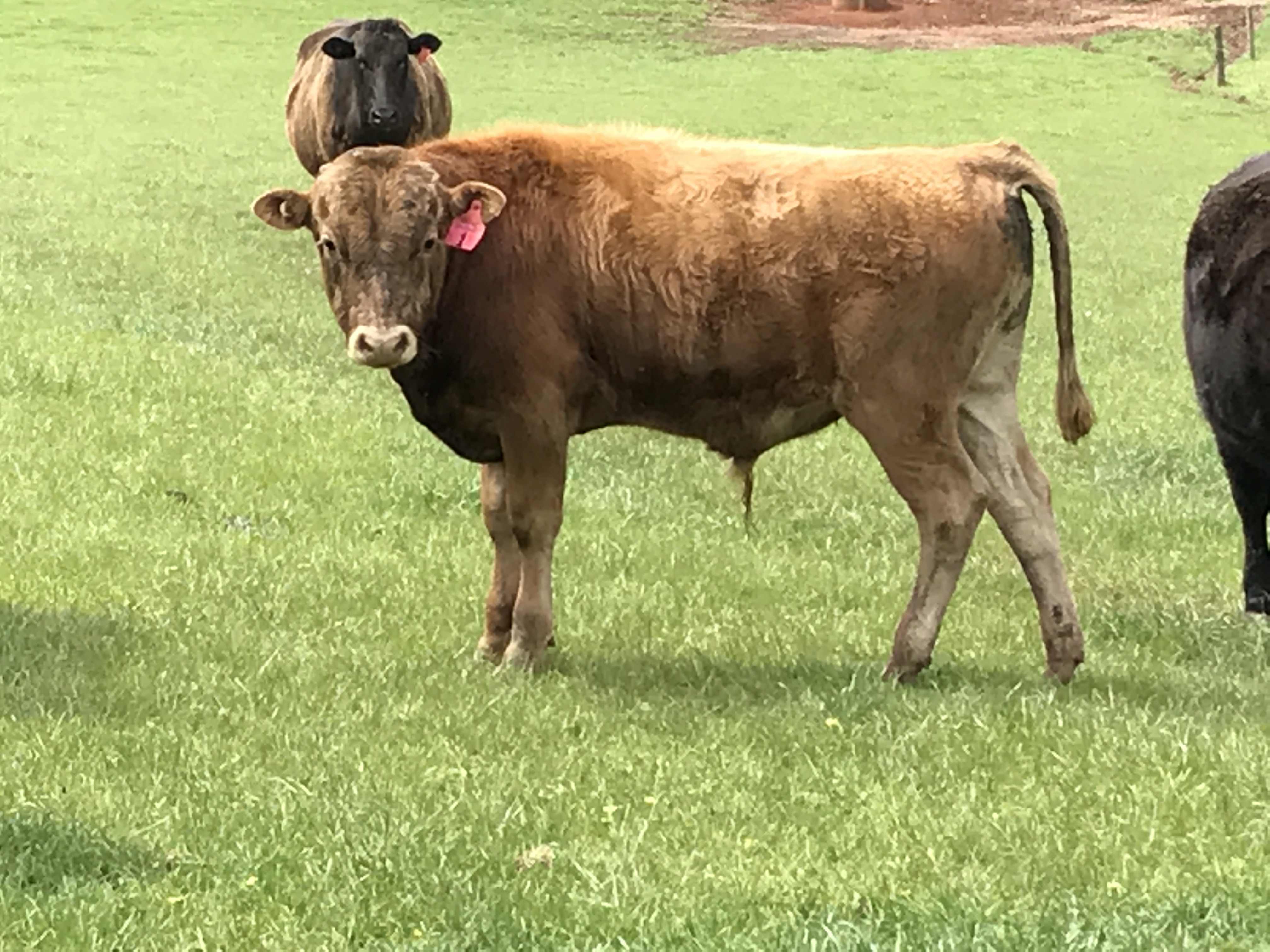
We are crossing our Polled Wagyu bulls with Normande cows. Normande are a dual purpose beef/dairy breed from Normandy. These days Pont l’Évêque and Camembert must contain at least 70% Normande milk. Normande have similar fat to Wagyu, with high levels of oleic and stearic acid (sweet, low-melting point white fat) and similar marbling to Wagyu also. We have chosen Normande with genetics for A2A2 milk and classic confirmation. Normande will add terrific maternal characteristics to Gippsland Poll.
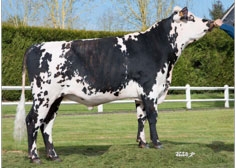
We are also crossing Lowline with Mishima. We then intend to cross the polled Wagyu/Normande with the polled Mishima/Lowline to stabilize a breed of black/blue roan smaller polled cattle with high marbling, soft fat and great maternal characteristics.
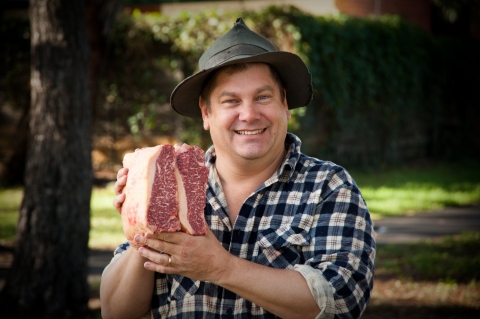
To purchase our meat for restaurants in Melbourne please contact Gamekeepers. For retail, we occasionally supply to George Street Butchers in Moe.